Livasys develops fast, maintainable and scalable websites that turn approved designs into reliable digital products. We focus on clean structure, responsive behavior, performance, security, integrations and long-term maintainability.
Development that respects the design
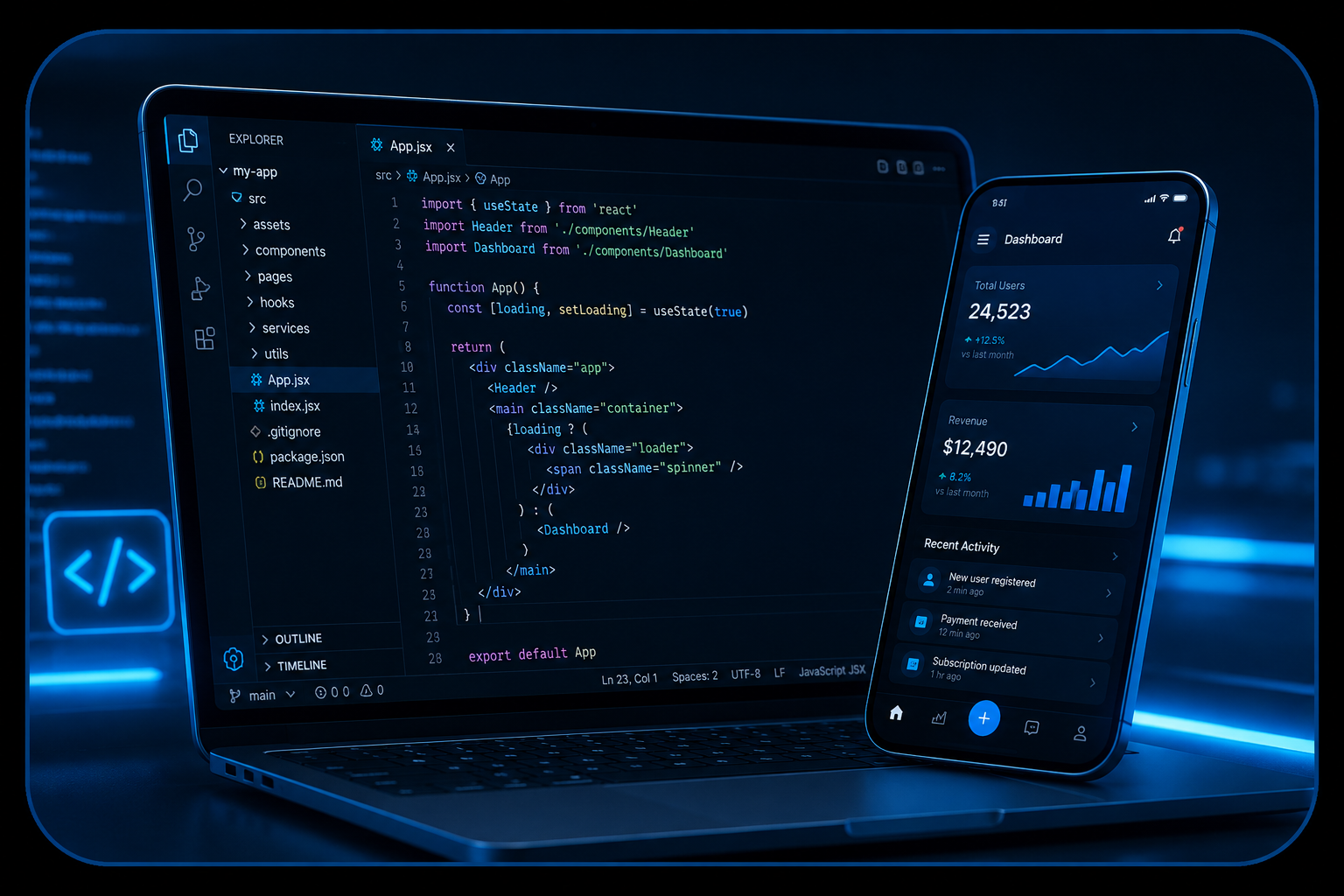
A polished design only becomes useful when the implementation preserves its intent. Our web development process translates layouts into responsive, accessible and functional interfaces while keeping the code organized. We work with technologies suited to the project, including WordPress, PHP, Laravel, CodeIgniter, Node.js, React and other modern web technologies when appropriate. The technology choice follows the business requirement rather than forcing every project into the same stack.
Fast websites are better business tools
Performance affects user experience, conversions and search visibility. We pay attention to asset sizes, image handling, CSS and JavaScript loading, layout stability, caching opportunities and unnecessary dependencies. We also avoid adding frameworks or libraries simply because they are popular. A focused implementation can be easier to maintain and faster to load. Performance work continues through testing rather than being treated as a last-minute optimization.
Responsive and accessible development
A website should work for the person using it, not just the developer who built it. We build responsive layouts with semantic HTML, keyboard-friendly interactions, readable typography and appropriate form labels. Navigation, cards, buttons and media are tested at different viewport sizes. This helps prevent common problems such as clipped content, horizontal scrolling, tiny tap targets and broken layouts on mobile devices.
CMS and content management
When a business needs to update pages frequently, a content management system can reduce dependency on developers. Livasys has extensive WordPress experience and can create custom themes, reusable content sections and manageable page structures. For projects requiring a custom administration layer, we can build more specialized solutions. The objective is to make content updates practical without compromising the front-end experience.
Integrations and business workflows
Websites increasingly connect to forms, CRMs, payment systems, analytics platforms, email tools, APIs and third-party services. We plan integrations around reliability and security. Inputs are validated, errors are handled clearly, and important workflows are tested from the user perspective. Where an API is involved, we consider authentication, rate limits, data mapping and failure states rather than assuming the external service will always respond perfectly.
Security and maintainability
Security is part of development quality. We use sensible access controls, input validation, dependency management and secure configuration practices appropriate to the project. We also structure code so future developers can understand it. Clear naming, reusable components and limited duplication make maintenance easier and reduce the chance that small changes create unexpected problems elsewhere.
SEO-ready technical foundations
Technical implementation influences how search engines and AI systems interpret a website. We support semantic HTML, crawlable internal links, descriptive metadata, canonical URLs, structured data where appropriate, clean page hierarchy and mobile-friendly layouts. These foundations work together with content and authority; development alone cannot guarantee rankings, but poor implementation can create avoidable barriers.
From build to launch
Our delivery process can include development, content integration, browser testing, mobile testing, form testing, analytics setup, SEO checks and launch support. We prefer controlled deployment and verification so important pages and conversions are checked before the site is considered complete. After launch, ongoing maintenance can keep the platform updated and aligned with changing business needs.
Who benefits from custom web development?
Custom development is useful when a business needs more than a static brochure site. Examples include service businesses with complex enquiry flows, organizations with custom calculators or dashboards, companies connecting multiple systems, and growing brands that need a platform capable of supporting new features. We can also improve an existing site when its current implementation has become difficult to maintain.
What the engagement can include
A web development engagement can include front-end implementation, CMS setup, reusable components, forms, integrations, analytics, technical SEO foundations, browser testing, mobile testing, performance checks and launch support. We can work from an existing design or collaborate with a designer during the project. For a redesign, we review the current implementation before deciding whether to refactor, rebuild specific areas or replace the front end. For custom functionality, we map the workflow and define the data and integration requirements before development begins. This reduces the risk of building features that later need to be redesigned. We also keep the codebase understandable so future updates do not depend on one person knowing every hidden shortcut. The best development work should make the next phase of the website easier, not harder. That means predictable components, sensible file organization, clean content structures and a deployment process that can be repeated safely when new releases are needed.
Before we begin
Useful inputs include your current website or design files, required pages, technology preferences if any, integrations, forms, user roles, analytics requirements, hosting details and examples of functionality you want to replicate or improve.
A development partner for the long term
Good development should leave the business with more control, not more dependency. We document important implementation choices, keep reusable patterns understandable and avoid unnecessary complexity. When the website needs a new section, campaign landing page or integration later, the existing structure should make that change predictable. We also encourage staging and controlled testing for significant updates so production changes are not made blindly. This mindset matters for growing businesses because the website becomes a working part of sales, marketing and customer communication rather than a static project that is forgotten after launch.
Frequently Asked Questions
Which technologies do you use?
Livasys works with technologies including WordPress, PHP, Laravel, CodeIgniter, Node.js and React, selecting the stack based on project requirements.
Can you develop from an existing design?
Yes. We can implement an existing Figma, design system or visual reference while improving responsiveness and technical quality where needed.
Do you provide maintenance?
Yes. Ongoing website maintenance can include updates, content changes, bug fixes, performance checks and technical support.
Can development help SEO?
Yes. Clean HTML, crawlable architecture, performance, responsive behavior, metadata and structured data can provide strong technical foundations for SEO.